Guided Reading and Review Chapter 2 Section 4
Freedom of Information Act Electronic Reading Room
Welcome to the Cardinal Intelligence Agency's Freedom of Information Human action Electronic Reading Room.
What is the Electronic Reading Room?
What's New on the Electronic Reading Room?
The Nixon Collection
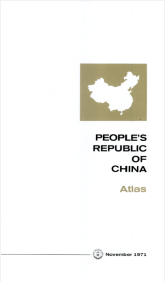
Nixon and the People'south Republic of Red china: CIA's Support of the Historic 1972 Presidential Trip
This collection marks the 50th anniversary ofPresident Richard M. Nixon's Feb 1972 trip to the People's Republic of China (PRC) – a landmark event that preceded the establishment of diplomatic relations betwixt the two countries. This pocket-size collection, consisting of three city guides, an atlas, and 4 leadership profiles, i s a subset of the materials CIA produced for President Nixon and National Security Adv isor Henry Kissinger in preparation for the vii-mean solar day visit.
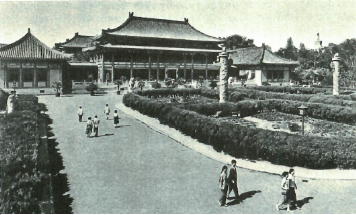
Metropolis guides were produced on Peking (Beijing), Shanghai, and Hang-Chou (Hangzhou) 1 , as these cities were part of President Nixon'south bout of the PRC. Each guide included a brief history of the city, contemporary maps and photographs, and descriptions of geography, climates, and points of interest.
CIA likewise produced an 82-page atlas of the PRC for President Nixon'southward trip. The US government distributed more than four,000 copies to government customers and not-regime institutions and libraries, and sold 30,000 copies to the public for a brusk period afterwards the trip for $five.25, or $35.19 in today's dollars. This is the first time in l years CIA has fabricated the atlas available to the public.
This collection also includes leadership profiles—assessments that CIA provides US Presidents and other policymakers to assist them in understanding their strange counterparts. The profiles in this collection include Chinese Communist Party (CCP) Chairman Mao Tse-tung (Mao Zedong) and Premier Chou En-lai (Zhou Enlai). A contour of Lin Piao (Lin Biao), Vice Chair of the CCP, prepared for this trip is also included in this drove; however, Lin died in a plane crash five months earlier President Nixon's visit.
_____________________
i CIA did not begin using the non-Romanization spelling of Beijing and Hangzhou until 1979. This article provides updated spellings elsewhere in parentheses.
See The Nixon Collection (8 documents/331 pages).
Current/Central Intelligence Bulletin Collection
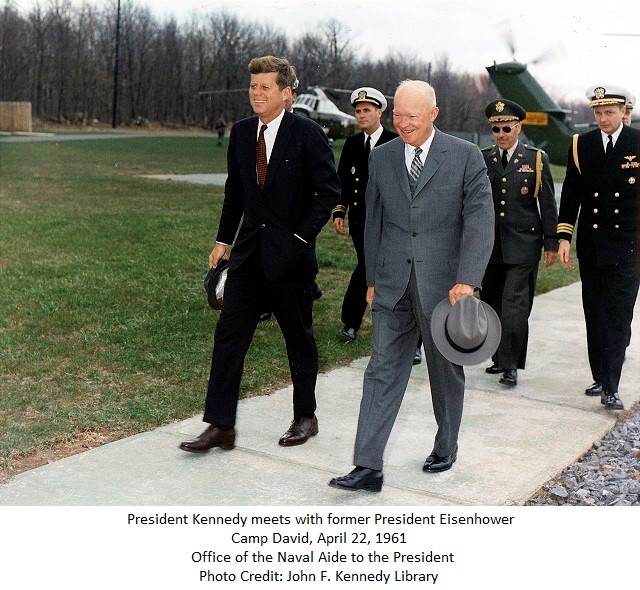
Fundamental Intelligence Bulletin
Harry Truman was the first U.S. president to receive a daily intelligence digest. At his direction, the Daily Summary began production in Feb 1946, and continued until Feb 1951. President Truman was pleased with the product, but a survey group commissioned by the National Security Council in 1949 was critical of the Daily Summary and issued several recommendations to improve information technology. The new version, called the Current Intelligence Message, began production on 28 Feb 1951, and this remained the format of the president'due south daily digest through Dwight Eisenhower'due south 2 terms, although it was retitled the Key Intelligence Bulletin in 1958. The Current/Primal Intelligence Bulletin grew longer than its predecessor over time with the add-on of more items and more analysis, and would eventually comprise more than graphics every bit printing technology improved.
2 January-30 June 1961
The new Kennedy Assistants confronted a total array of international issues in 1961. In April, a grouping of CIA-trained Cuban exiles landed at the Bay of Pigs on the southern coast of Cuba with the goal of overthrowing the Fidel Castro government and establishing an anti-Communist government. The outnumbered invading forcefulness was quickly repelled by Castro'due south troops. The year's reports were dominated by the worsening Congo crisis, with the fragmentation of the country widening despite the efforts of the Un, and U.s. concern over the loftier tempo of Soviet testing of space vehicles and intercontinental ballistic missiles. The state of affairs in Lao people's democratic republic deteriorated, as the Communist Pathet Lao insurgency gained strength against the United states-backed Royal Lao government.
The changes at the CIA following the Bay of Pigs included a format update for the president's daily intelligence study. The new version, called the President'due south Intelligence Checklist (PICL), was beginning delivered on 17 June 1961. The Central Intelligence Bulletin continued to be produced as a separate publication until 10 Jan 1974, when it was replaced by the National Intelligence Daily. The PICL, withal, was the president'due south primary written intelligence source through the remainder of the Kennedy Administration. The Kennedy PICL reports are bachelor here
This historical release includes: the Central Intelligence Bulletin reports from 2 January-xxx June 1961 (2752 pages).
This release is the thirteenth and concluding release in the Current/Primal Intelligence Bulletin serial.
See the Current/Primal Intelligence Bulletin Drove
Aquiline
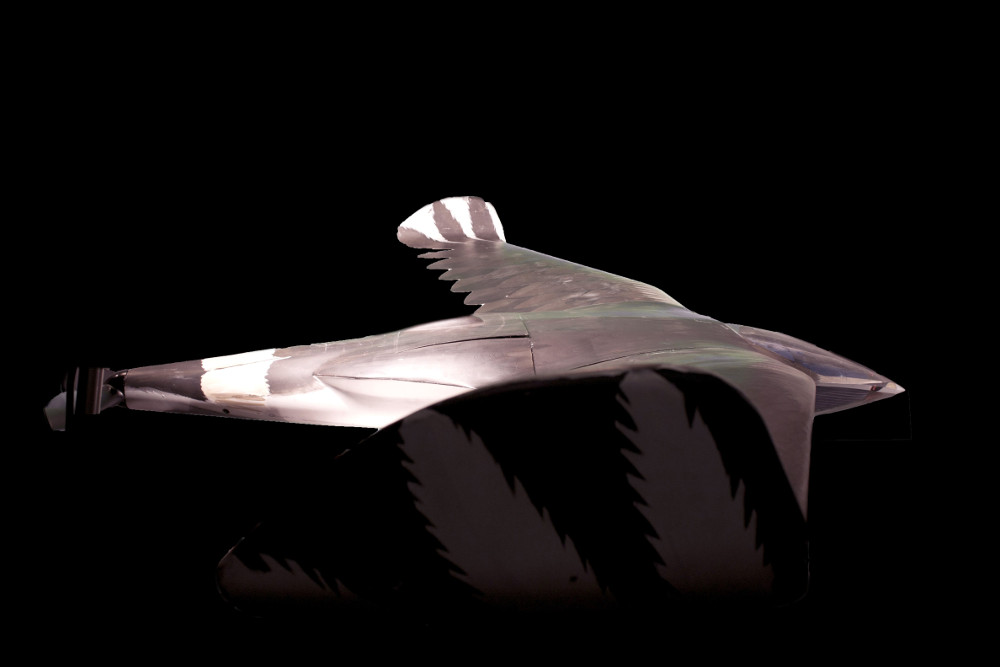
aquiline adj. of or similar the eagle.
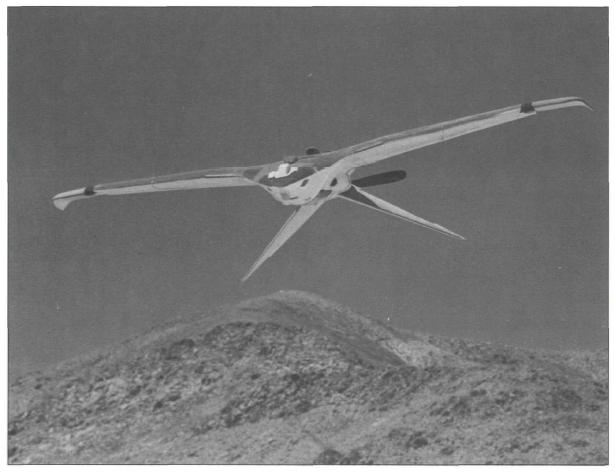
Aerial intelligence collection platforms have played a critical role in US national security from the primeval beginnings of aviation. CIA's 1960s OXCART Program and its use of U-2s are examples of drove innovations that have kept Usa leaders informed about adversaries' capabilities and intentions. Despite their success, however, utilize of these platforms carried significant risks and repercussions, including detection and even airplane pilot loss, such equally the downing of the U-ii flown by Francis Gary Powers in 1960. E'er-evolving inquiry by the CIA led to the development concept of unmanned aerial vehicles (UAVs) as drove platforms. An innovative Bureau plan in the 1960s codenamed Aquiline was the very commencement to examination this concept. Based initially on the written report of flight characteristics of birds, Aquiline was envisioned as a long-range vehicle that could safely and stealthily provide a window into denied areas such as the Soviet Wedlock through photography and other capabilities, and would fifty-fifty support in-place agent operations. While information technology never became operational, the concept proved invaluable equally a forerunner to today'south multi-capability UAVs.
Learn more than about CIA's early eagle (forty documents/289 pages).
The Collapse of Communism in Eastern Europe: A 30-Year Legacy
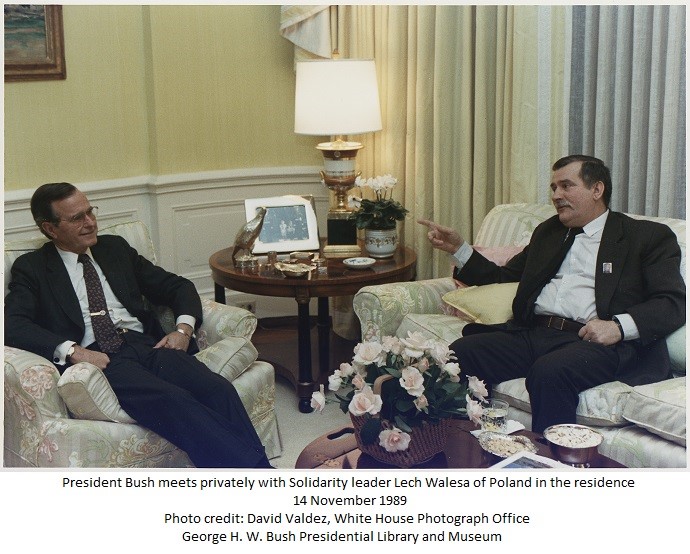
The Plummet of Communism in Eastern Europe: A 30-Yr Legacy
This collection includes a broad sampling of manufactures from the National Intelligence Daily—the CIA's main course of current intelligence analysis at the time—from February 1989 to March 1990. These articles represent much of the Bureau'south brusque-term analysis of events unfolding in Central and Eastern Europe every bit pop opposition to Soviet misrule erupted and quickly surpassed annihilation the Communist regimes were prepared to empathise or to which they could respond. The material also represents a major source of data and insight for U.s.a. policymakers into what was happening in these countries, where the state of affairs was heading, and how a collapse of Communist dominion in Europe and the ancestry of the breakup of the Soviet Spousal relationship would impact Europe and the The states.
Please note: Some of the fabric is marked "NR" or "non relevant." This means that material is unrelated to events in Central and Eastern Europe, and was therefore non reviewed for declassification equally function of this collection.
Larn more nigh the collapse of Communist rule in Europe (105 documents/151 pages)
Source: https://www.cia.gov/readingroom/home
0 Response to "Guided Reading and Review Chapter 2 Section 4"
Post a Comment